Johnnys Tree Services Blog
Stump Grinding in Philadelphia: When Is an On-Site Assessment Worth Requesting?
An on-site assessment is especially useful when a stump’s size, position, surrounding features, or access route make the grinding scope hard to describe remotely. Learn what to observe, what photos can clarify, and what to ask before arranging stump grinding in Philadelphia.
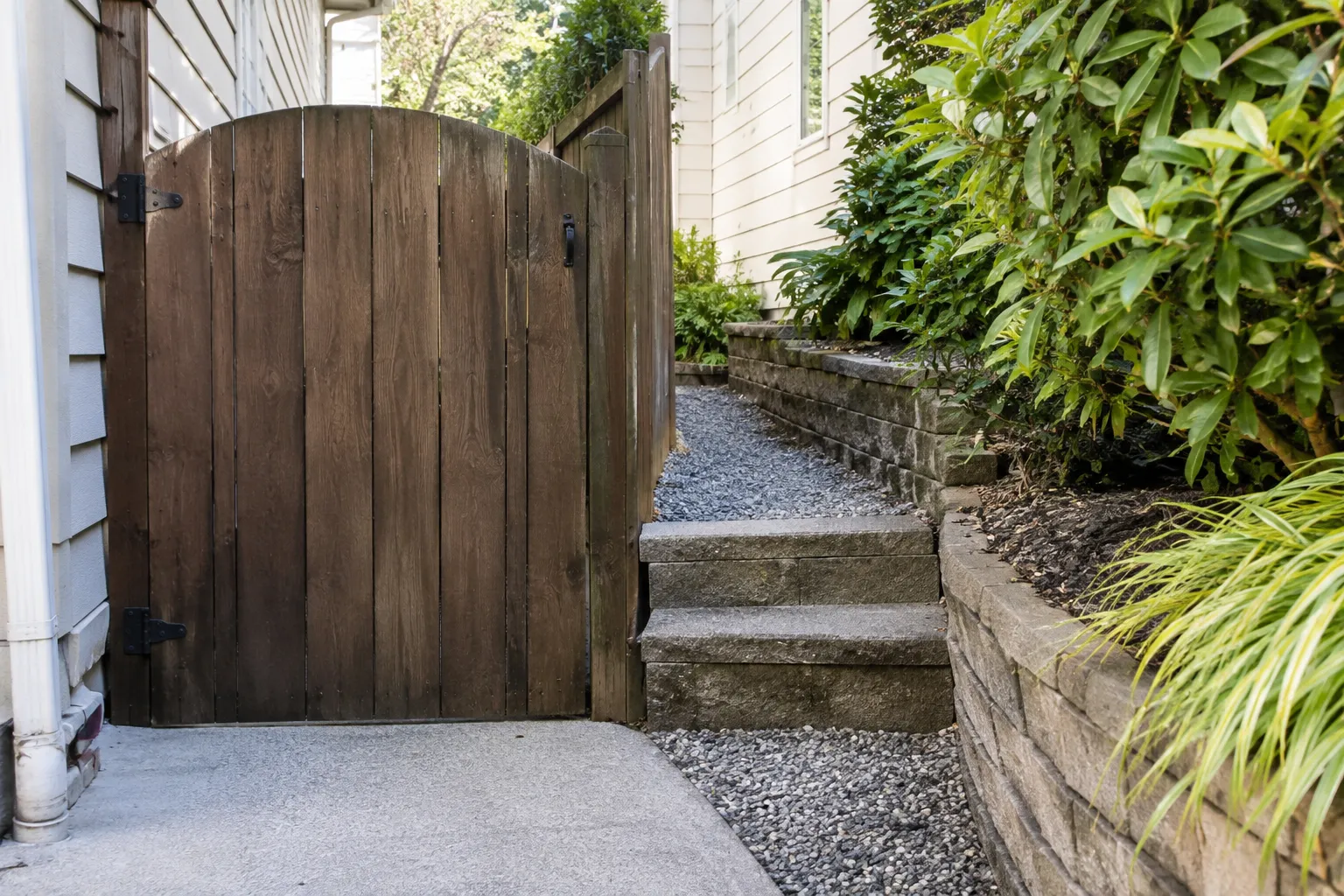
Request an on-site assessment when the stump’s size, location, surrounding features, or access route make it difficult to describe the work clearly from photos or a brief call. A straightforward, visible stump with an open approach may be easier to discuss remotely. If the site is confined, uneven, obstructed, or has several stumps, an in-person look can help clarify what needs review. It is a way to discuss the scope, not a promise of a particular method, price, or result; those depend on the actual conditions.
When a remote description may be enough
A remote conversation can be a reasonable starting point when there is one clearly visible stump, the surrounding ground is easy to see, and the route from the access point to the stump appears open. This does not establish that an on-site visit is unnecessary. It gives the provider an initial picture and helps identify what remains uncertain before discussing an estimate.
Share the stump’s approximate size and location, along with clear photos that show it and the nearby area. Include a wider view that helps explain where the stump sits in the yard, not just a close-up of the cut surface. If the stump is partly hidden by plants, stored items, fencing, or other obstacles, say so rather than assuming the image shows the full situation. The service page for stump grinding in Philadelphia invites property owners to share approximate size, location, and access when discussing the work.
Conditions that make an on-site look useful
Consider asking whether an on-site assessment would help when the stump is close to a fence, wall, building, paved area, or other feature that could affect how the work is approached. The same applies when the route appears narrow, has steps or a slope, or passes through a gate whose usable width is unclear. These details do not prove that a visit is required; they signal that a photo or short description may leave important questions unanswered.
An assessment may also be useful if there are multiple stumps, visible roots extending into a nearby area, limited room to position equipment, or uncertainty about what should happen to the resulting wood chips or disturbed ground. Describe what you can see and ask which parts of the scope need an in-person review. For example, imagine a stump behind a narrow side gate with a fence close by. That illustrative situation may justify asking whether someone should view the access route before the work is discussed in detail; it is not a claim about a completed job or a particular equipment requirement.
- Ask about an on-site review if access is narrow, obstructed, sloped, or difficult to show in a photo.
- Mention nearby structures, hard surfaces, fences, and other features around the stump.
- Explain whether there is one stump or several, and identify any visible roots or surrounding areas of concern.
- Clarify whether the discussion includes chips, cleanup, or the condition of the ground afterward.
Compare the two ways to start
Neither a remote discussion nor an on-site assessment is automatically the right choice for every property. The useful question is whether the available information is enough to describe the work and identify what still needs checking. Use this comparison to decide what to request first, then let the provider explain whether more information or a visit would help.
| Start with photos or a call | Ask about an on-site assessment |
|---|---|
| The stump and its surroundings are visible, and the approach appears straightforward. | The stump or route is partly hidden, confined, uneven, or difficult to describe. |
| You can share approximate size, location, and a useful wide view. | Nearby features or multiple stumps may affect how the scope is understood. |
| You want to begin the conversation and learn what details are missing. | You want the provider to review site conditions that images may not show clearly. |
| Ask what can be discussed from the information provided and what remains uncertain. | Ask what the visit will assess and what information or decisions it will help clarify. |
A remote estimate discussion can begin the process; an on-site assessment is worth asking about when important site details remain unclear.
Prepare useful details and clarify the scope
Before contacting a provider, note the stump’s approximate size and where it is in relation to the house, fence, driveway, or other visible features. Take a close view and a wider view from a position that shows the approach. If a gate, path, slope, or obstruction affects access, describe it plainly. Photos and notes help start a conversation, but they cannot reveal every condition beneath the surface or replace an assessment when one is needed.
Ask what the proposed work includes and what is outside the discussed scope. For instance, clarify whether the conversation covers only grinding or also addresses chips and general cleanup. If you have a preference about the area afterward, state it and ask whether it can be considered. Do not assume that grinding includes removal of all roots, restoration of the surrounding ground, or a particular finish unless those details are explicitly discussed.
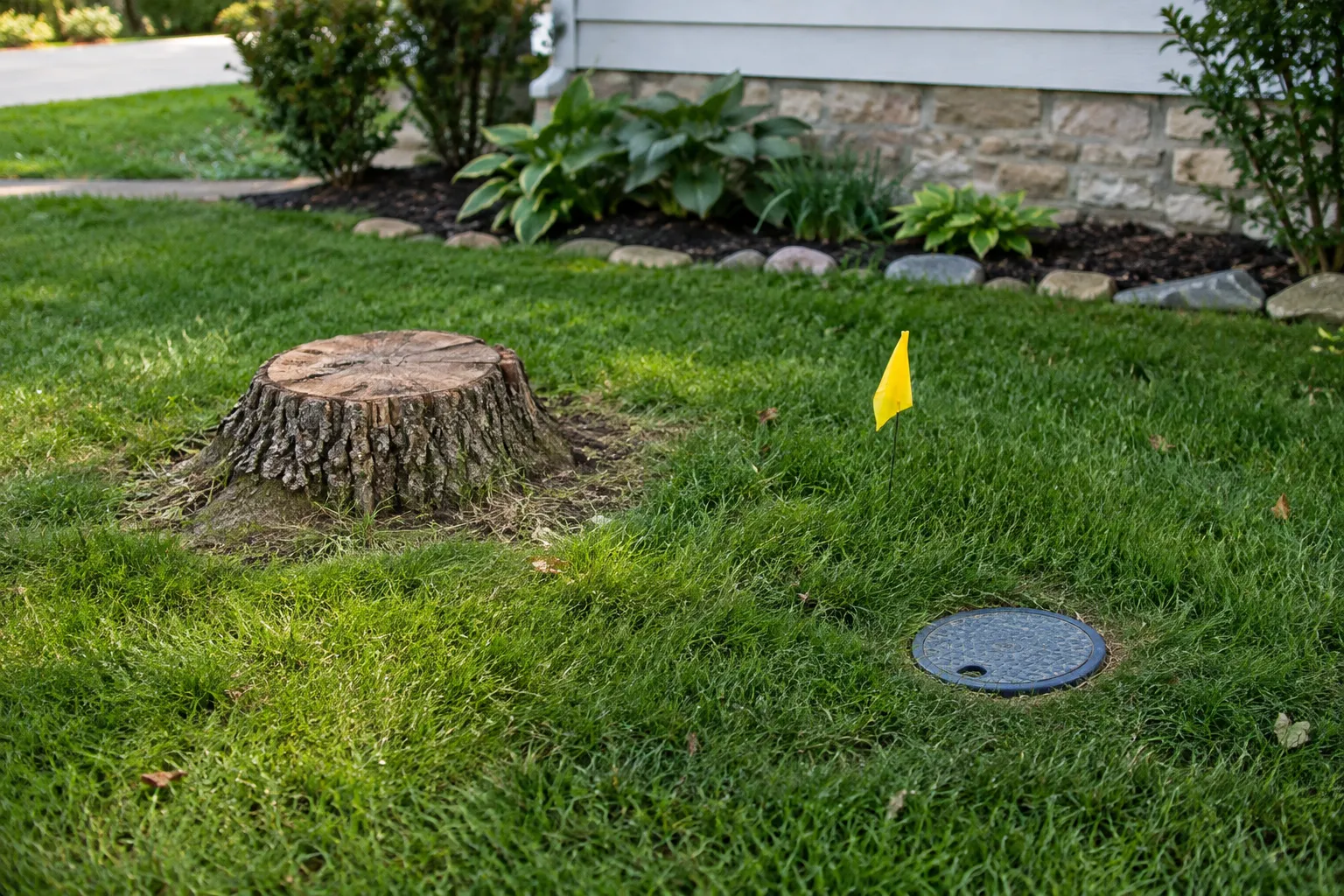
If the work will disturb soil, ask the provider how underground utility locating is handled before work begins. Pennsylvania guidance says excavation involving powered equipment requires notification to the state’s One Call system, and homeowners should ask a hired excavator about the applicable process for the work. Do not treat a visual inspection or an on-site conversation as a substitute for required locating steps. The timing and responsibilities should be confirmed for the actual project before excavation starts.
Common questions
What should I send before asking?
Share the stump’s approximate size and location, a close photo, and a wider view showing the approach and nearby features. Mention anything the images do not show well, such as a narrow gate, slope, obstruction, or additional stumps. Ask whether those details are enough to discuss the work or whether an on-site assessment would help. Photos are useful context, but they do not confirm hidden site conditions or settle the final scope.
Does an assessment set the final scope?
It can help the provider understand visible site conditions and discuss the work, but the visit alone does not establish every detail. Ask what the assessment covers, what assumptions remain, and how the agreed scope will be described before scheduling. Confirm how chips, cleanup, and the condition of the surrounding ground are handled rather than inferring them from the word “grinding.” The appropriate approach and outcome depend on the property and the agreed work.